Components (BOM)
To help identify the components, most of them are linked to their LCSC pages.
All the components are pass-through components.
The resistors can be either 1/4W or 1/8W.
Designators in bold indicate components that must be inserted with the correct polarity/orientation (as marked on the PCB).
| Des. | Component | Qty | Notes |
|---|---|---|---|
| U1 | ATMEGA328P | 1 | The brain of the system. You probably have this MCU lying around somewhere — it’s time to bring it back to life! U1 and U2 must not be socketed, otherwise the assembled PCB will not fit inside the enclosure. |
| U2 | DS1307N | 1 | Real-time clock with battery backup. |
| U3 | DS18B20 | 1 | 1-Wire Temperature sensor. If no external sensor is present, it serves as the system's reference temperature. |
| U4 | LM7805 | 1 | Voltage regulator. It provides 5 V to the logic. It must be firmly secured to the PCB using an M3 × 5 mm bolt and nut, ensuring good thermal and electrical contact between the 7805 back tab and the PCB ground plane. |
| X1 | Crystal 16Mhz | 1 | Heartbeat of the ATMega328P |
| X2 | Crystal 32768hz 12.5pf | 1 | Heartbeat of the DS1307N. The lower the ppm error, the more accurate the clock will be. This is the most delicate component of the control unit. It is recommended to seal it with a few drops of neutral silicone after soldering. |
| Q1 | N-Channel Mosfet TO-220 | 1 | Switches the solenoid valve on and off. Use any TO-220 N-channel MOSFET rated ≥30 V with low RDS(on) at VGS = 4.5–5 V. Secure it to the PCB with an M3 × 5 mm bolt and nut. An insulating pad must be placed between the tab and the PCB to ensure proper electrical isolation. |
| LED1 | 3mm Red Led | 1 | Blinks every second. It must be raised 6 mm above the PCB using a led spacer. |
| R1 | Resistor 2M Ohm 1/8W | 1 | Resistor for sensing the battery voltage. |
| R2, R4, R5, R7, R8 | Resistor 10K Ohm 1/8W | 5 | Pull-up resistors. |
| R3 | Resistor 300 Ohm 1/8W | 1 | LED1 resistor. |
| R6 | Resistor 2.2K Ohm 1/8W | 1 | 1-wire sensor pullup. |
| R9 | Resistor 100 Ohm 1/8W | 1 | Q1 gate resistor. |
| C1 | 330 nF Ceramic Capacitor 2.54mm pitch | 1 | U4 input capacitor. |
| C2, C5, C6, C7, C8, C9 | 100 nF Ceramic Capacitor 2.54mm pitch | 6 | Decoupling capacitors. |
| C3, C4 | 22pF Ceramic Capacitor 2.54mm pitch | 2 | X1 Load capacitors. |
| D1, D2 | SCHOTTKY diode 40V 5A | 2 | Reverse current and valve flyback protection. If you don't need the reverse current protection, you can replace D1 with a piece of electric wire. |
| F1, F2 | 5x20 Fuse Clip 4.8mm pitch | 2 | Fuse holder. A 3A fuse is also required. |
| SW1, SW2, SW3 | Tactile Switch SPST 12x12x11mm | 3 | User interface buttons. Button height: 11 mm. |
| BAT1 | CR2032 battery holder | 1 | A CR2032 battery is also required. |
| DISP1 | 2.42'' OLED SPI display | 1 | A display spacer is also required. More info from the Control Build page. |
| P1 | 7-position terminal block 5mm pitch | 1 | The terminal block height must be 10.5 mm or less, otherwise the enclosure cover will not close properly. |
| P2 | 2x3 pins male header 2.54mm pitch | 1 | AVR ISP programming port. |
System Components
To complete the off-grid system, you will also need the following components.
| Component | Description |
|---|---|
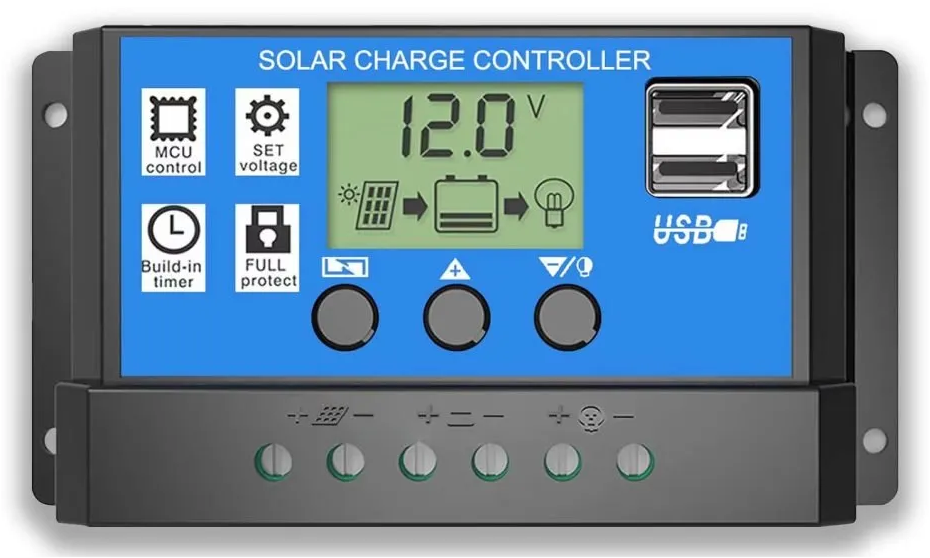
| Solar Charge Controller | The controller used is a cheap, no-brand unit from China (see picture below). It is very common, and you should find it easily online. I have tested several of these over the years, and all of them have worked without issues. This is just a suggestion if you want to keep costs low; of course, you can upgrade to an MPPT controller if you prefer. |
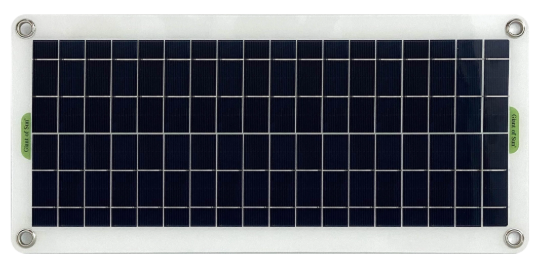
| 12V Solar Panel | The solar panel must have a nominal voltage of 12 V and an open-circuit voltage (Voc) below 25 V. Under full sun conditions, it should be capable of delivering at least 0.3 A. The 10 W solar panel used in this project has four eyelets at the corners, allowing it to be easily mounted to a wall. |
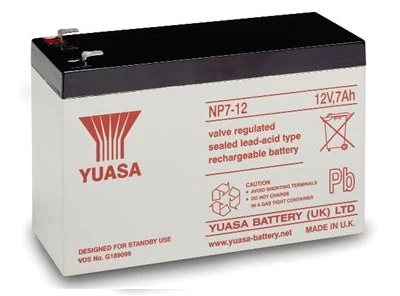
| 12V Battery | A 12 V lead-acid battery, with a capacity of at least 7 Ah, must be used. Depending on battery quality, the battery should be replaced after 3–5 years of continuous use. |
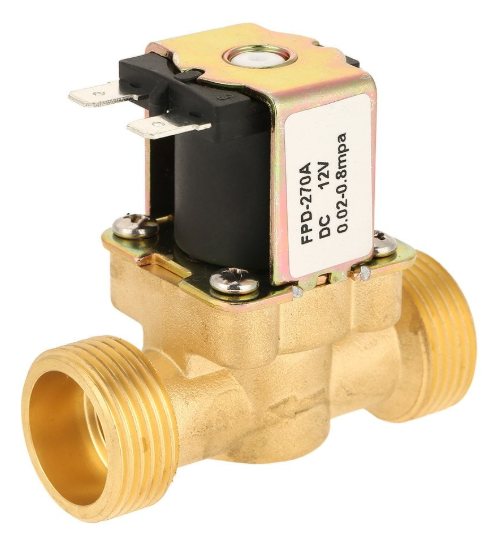
| 12V Solenoid Valve | A 12 V normally closed (NC) solenoid valve. Cheap valves should be replaced after 2–3 years of continuous use. |
| Sensor (Optional) | An external temperature/soil-moisture sensor. More info here. |